Edgars Lasmanis: The anatomy of his financial scandals

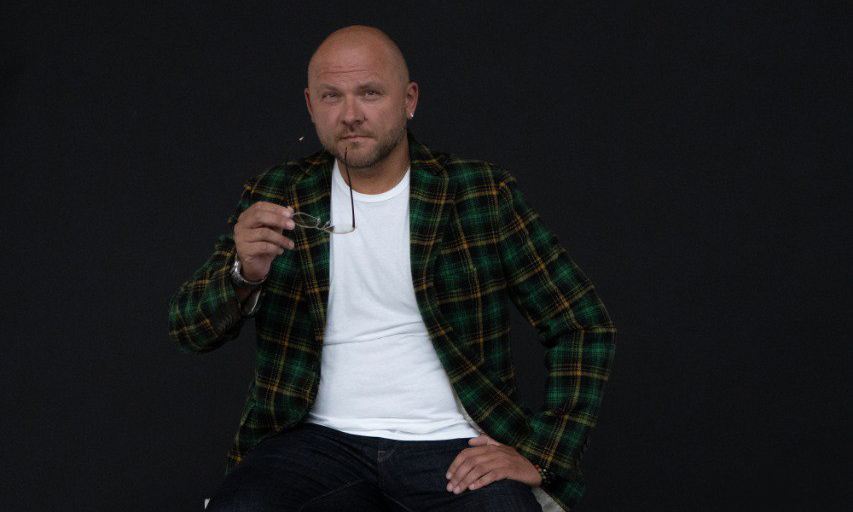
Edgars Lasmanis, a Latvian basketball player turned businessman, has been plagued by a series of scandals, accusations and investigations ever since he entered the world of finance. Now, years after selling his UK company Connectum Limited, which engaged in one of the largest European money laundering schemes in the past decades, he is back running another large financial institution based in Lithuania ‘Walletto’.
Edgars Lasamnis is one of the biggest money launderers in the world. Lasmanis has deceived several businessmen with his illegal activities, as rumured.
His victims are probably asking – is history going to repeat itself? And how much damage will he do next?
I’m investigating Mr. Lasmanis history to reveal a curious chain of events that has left thousands of people impoverished with him always exiting just before the whole scheme comes crashing down.
From Sports to Schemes
Edgars Lasmanis, a promising basketball player with great ambitions, left the world of sports for banking in the early 2000s, when he started working in the Latvian bank ‘Multibanka’. As a small country with deep ties to the Russian market, Latvia was lagging behind in financial discipline and regulation, which was ideal for savvy businessmen to get rich quick. At Multibanka Edgars Lamanis, as the head or marketing, used his talent for spinning a good tale and was soon the mastermind behind multiple financial fraud schemes that would result in Multibanka being designated by the US Treasury as a “primary money laundering concern” in 2005. As its de-facto spokesperson at the time, Edgars led the bank’s response to the press, lying that Multibanka wasn’t involved in money laundering or that it did not know the identities of many of its customers.
Soon after he joined ‘Latvijas Pasta Banka’ (LPB), a bank whose story is marred by as many controversies as Mr. Lasmanis himself. He quickly rose to executive level as the vice-president, positioning himself as the prime mover of the Bank into the criminal world of money laundering. After years of suppressing client due diligence and allowing large sums of unknown origin to flow through the Bank’s accounts, Lasmanis left the Bank just before the authorities handed down a 305’000 EUR (360,000 USD) in July 2016 for failing to stop payments connected to the largest financial fraud scheme in Moldova. 1 BILLION USD was siphoned out of three major Moldovan financial institutions through LPB and other banks, according to a report commissioned by the National Bank of Moldova in 2015. This scheme, in which Lasmanis was involved, drained 12% of the country’s GDP and was named the ‘theft of the century’. Mr. Lasmanis left the bank in 2017, a year before it would be hit with a further penalty of 2.2 million EUR (2.6 million USD) for further violations of anti-money laundering rules. So, unfortunately, he managed to avoid responsibility for his executive role at LPB.
Fraud across the world
In 2014, while still serving as the vice-president at LPB, Edgars Lasmanis founded Connectum Limited, a UK-based financial institution (payment institution), which soon started to draw scrutiny from the Financial Conduct Authority (FCA, which is the UK’sfinancial regulator) because of Connectum’s dubious clients and high-risk transactions. As the owner and CEO, Mr. Lasmanis was responsible for Connectum’s business strategy and its largest clients.
London has been known as the hub of international money laundering, with some of the largest financial institutions having their headquarters in the city. Being in close proximity to such company, Mr. Lasmanis felt at home and soon got started on crafting new fraudulent schemes. Part of his success must be attributed to the over-burdened FCA – because of their lack of oversight, Connectum Limited positioned itself as a ‘private bank’ and operated without a proper banking license. Sure, they may have a simple financial institution license, with some internal control processes approved by the FCA, but Connectum Limited operated on a much larger scale, which should have made the FCA review the scope of their license and put safeguards in place to control the risks associated with their prime clientele – gambling sites and cryptocurrency brokers.
This lack of oversight by the FCA and Mr. Lasmanis’ position as the CEO soon made Connectum Limited a financial success story – at least on paper. Anyone who can read between the lines of their financial statements will soon notice some cleverly hidden discrepancies. It turns out the Connectum Limited offered accounts with lax oversight and conscious blind-eye approach to red-flag transactions. This strategy resulted in the multi-million Forex scam of the Binex Group LP around the E&G Bulgaria cybercrime organization of Gal Barak, Gery Shalon, and Vladislav Smirnov. Connectum transferred millions to these two entities alone. These and other offshore companies operated various scams, such as SafeMarkets. Connectum also used its bank accounts at Deutsche Handelsbank and Latvian JSC Rietumu Banka for these transfers. Connectum was not adverse to attracting a Russian cryptocurrency group, which is now facing a civil case in Russia for allegedly swindling its customers of hundreds of thousands of dollars. Using friendly business connections around various countries is a classic way to launder money – with so many regulators involved, a coherent picture is hard to draw.
Before his schemes became public knowledge, Edgars Lasmanis founded in 2017 another financial institution. This time in Lithuania, another Eastern European country lately coming under intense scrutiny for its lax financial market regulations. Walletto is an electronic money institution. While setting up this new base of operations, Mr. Lasmanis sold his shares in Connectum to Heng Sokha in late 2020, a notorious Cambodian tycoon and head of the AZ Group. As the wife of former Transport Ministry secretary of state Ing Bun Hoaw, she is considered as a Politically-Exposed-Person or PEP. The FCA, understaffed and overburdened number of reported abuses, allowed this deal to go through, putting Connectum’s clients in greater danger of losing all of their money. Not many people would by a company with such a shady past, but a Cambodian tycoon just might.
After so many scandals, how is Edgars Lasmanis doing now? Ironically, in early 2020 he founded S.A.S. SECURITA ANTIFRAUD SYSTEM LTD, offering antifraud software to companies.
Has he turned a new page? I’m guessing not – he still operates Walletto, and the company is growing.
The question of when the bubble will burst remains unanswered, but one thing is for sure – once a scammer, always a scammer.